The AI agent chain I run.
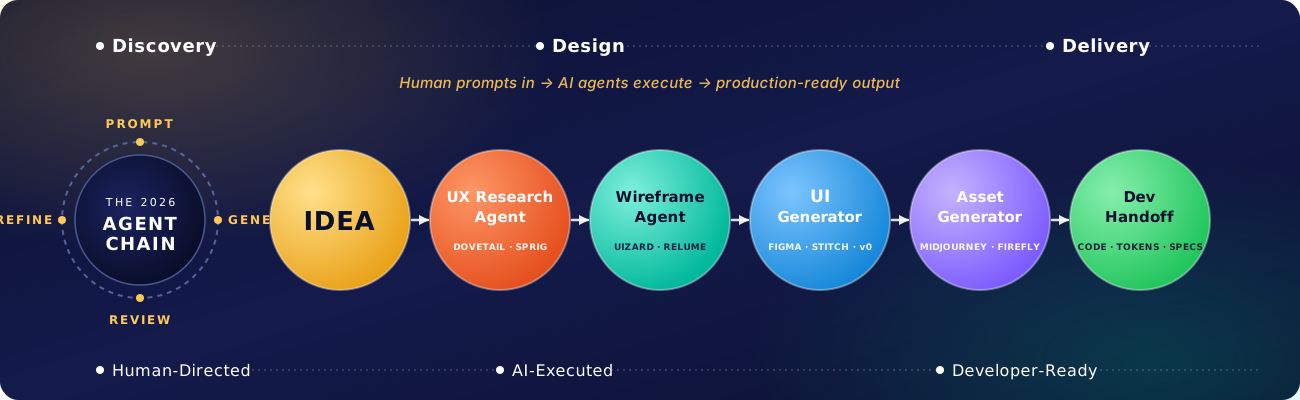
Human-directed intent
The chain starts with a prompt: a problem to solve, a user to serve, an opportunity to pressure-test. I own the brief.
Dovetail · Sprig · UX Pilot
Agentic synthesis of interviews, surveys, and behavior. Patterns surface in minutes; synthetic testers pressure-test before real users.
Uizard · Relume
Prompts and sketches become sitemaps and low-fi flows. Structure first, before pixels — I curate and redirect.
Figma Make · Stitch · v0
Hi-fi screens generated against the live design system — brand-consistent, not generic. The shift: tools understand your tokens.
Midjourney · Firefly
Illustration, imagery, icon systems, and marketing visuals produced on-spec and on-brand. No more stock-photo compromises.
Claude Code · Copilot · v0
Figma to production HTML/CSS/React. Handoff stops being a wall; the design that ships is the design that was approved.
AI agents I run inside the chain
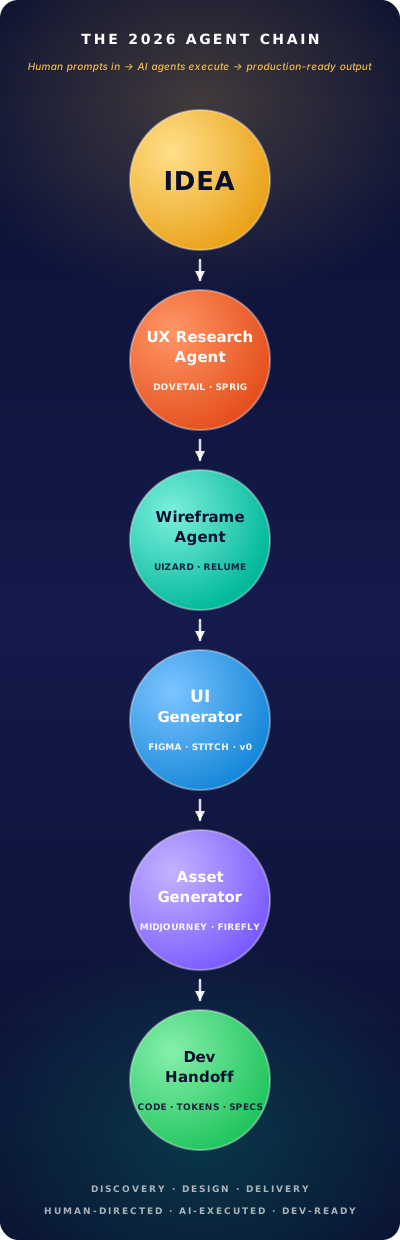
Mapped to the six stages above — the exact tools I deploy in 2026, sourced from the UX & AI Resources index.
UX Research & Synthesis
- Dovetail — agentic synthesis; auto-themes across interviews & surveys
- Sprig AI — Design, Field, & Synthesize agents for open-ended data
- Maze — AI-first usability + prototype validation
- UX Pilot — interview-question generation
- Uxia — synthetic AI testers for early rounds
- Claude / ChatGPT — affinity mapping, persona drafts
Wireframes & Sitemaps
- Uizard — rapid wireframes from prompts & sketches
- Relume — AI sitemaps & wireframes for web / marketing
- Google Stitch — prompts → multi-screen flows
- Claude Design — low-fi exploration + system reasoning
UI Generation
- Figma AI / Figma Make — hi-fi UI aware of your design system
- Google Stitch — exports to Figma or code
- v0 (Vercel) — production-ready web UI from language
- Framer AI — prototype & site generation
Asset Generation
- Midjourney — brand imagery, illustration, hero visuals
- Adobe Firefly — vector, icon systems, brand-safe assets
- Figma Make — in-context component variants & states
Accessibility & Validation
- Stark — a11y audits inside Figma
- Attention Insight — pre-launch heatmaps & prioritization
- Miro AI — journey & service-blueprint acceleration
Dev Handoff
- Claude Code — Figma → production React / HTML / CSS
- GitHub Copilot — in-editor code generation
- v0 (Vercel) — production-ready components
- DeepSeek — reasoning-heavy code tasks
The notable shift this year
Tools now understand design systems and brand consistency rather than producing generic templates — and “synthetic user” testing (Uxia, Sprig) pressure-tests designs before real user studies. That is why the chain works end-to-end in 2026, where in 2024 it broke at every seam.